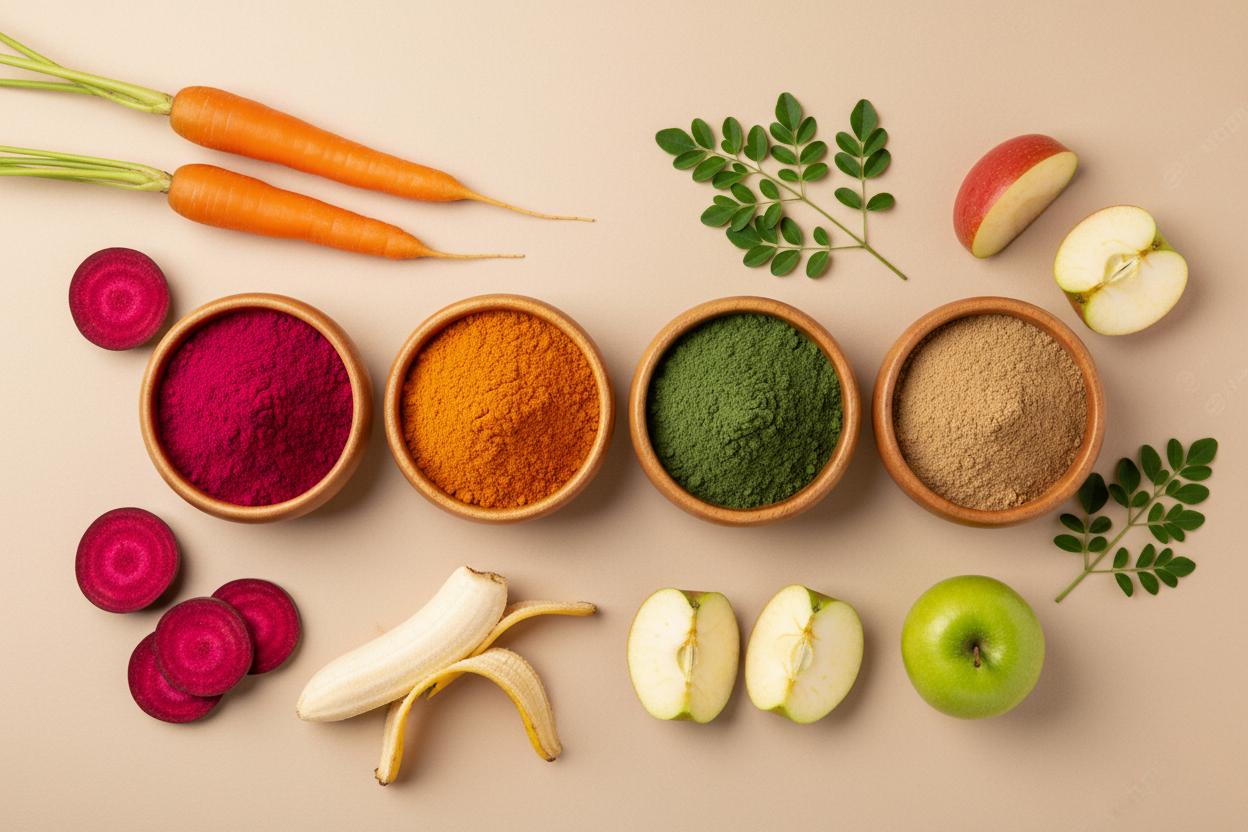
Natural food powders are becoming popular among people who want to include more natural ingredients in their daily diet. Products like moringa powder, beetroot powder and spirulina powder are commonly used in smoothies, juices and everyday recipes.
But are natural food powders suitable for everyone?
The simple answer is No. Although many people can enjoy natural food powders as part of a balanced diet, they may not be suitable for everyone. Age, health conditions, allergies, medications and individual nutritional needs are important factors to consider.
Let’s understand who can use these powders, who should be careful and how to choose the right product.
- 1. What Are Natural Food Powders?
- 2. Who Can Use Natural Food Powders?
- 3. Are Natural Food Powders Suitable for Children?
- 4. Can Pregnant and Breastfeeding Women Use Natural Food Powders?
- 5. Who Should Be Careful Before Using Food Powders?
- 6. Understanding Three Popular Natural Food Powders
- 7. How to Choose Good-Quality Natural Food Powders
- 8. Are Natural Food Powders Better Than Fresh Foods?
- Frequently Asked Questions (FAQs)
1. What Are Natural Food Powders?
Natural food powders are made by drying and processing ingredients such as leaves, vegetables, fruits and algae into a fine powder.
They are convenient because you can add them to different foods and drinks without preparing the fresh ingredients every time.
Some popular natural food powders include:
- Moringa Powder: Made from dried moringa leaves.
- Beetroot Powder: Made from dried beetroot.
- Spirulina Powder: Made from dried blue-green microalgae.
Each powder has a different nutritional profile, taste and method of use.
2. Who Can Use Natural Food Powders?
Many healthy adults can include suitable food powders in their regular diet, provided they choose good-quality products and follow appropriate serving instructions.
Adults
Adults can add food powders to smoothies, juices, soups and other recipes. It is important to maintain a balanced diet rather than depending on one ingredient for nutrition.
People Interested in Healthy Eating
People who enjoy experimenting with natural ingredients can use these powders to add variety, colour and flavour to their meals.
Vegetarians
Moringa and spirulina are plant-based food ingredients. Spirulina also contains protein, although its suitability and nutritional contribution depend on the amount consumed.
People With Busy Lifestyles
Powders are convenient to store and use. They can be mixed into drinks or added to meals without much preparation.
3. Are Natural Food Powders Suitable for Children?
Children have different nutritional requirements from adults.
Although some food powders may be used as ingredients in family meals, concentrated servings and supplements should not automatically be considered suitable for children.
Parents should:
- Consult a paediatrician before introducing concentrated food powders regularly.
- Check the ingredient list carefully.
- Avoid products with unclear ingredients or quality information.
- Never use food powders as a replacement for balanced meals.
4. Can Pregnant and Breastfeeding Women Use Natural Food Powders?
Pregnant and breastfeeding women should be particularly careful when using concentrated food powders.
Some ingredients may have limited safety information during pregnancy and breastfeeding.
For example:
- Moringa leaf products should not automatically be assumed safe in concentrated amounts during pregnancy.
- Spirulina should only be considered from reliable sources with appropriate contamination testing.
- Beetroot powder may not be suitable for everyone, particularly people with certain medical conditions.
Always consult a qualified healthcare professional before adding concentrated powders or supplements to your routine.
5. Who Should Be Careful Before Using Food Powders?
Natural ingredients are not suitable for everyone in every situation.
The following people should seek medical advice before regular use:
People taking regular medication
Moringa may affect blood sugar or blood pressure, potentially interacting with related medications.
People with kidney-related conditions
Some powders may contain minerals or other compounds that need to be considered when following a medically advised diet.
People with allergies
Check the ingredients and possible cross-contamination information before trying a new product.
People with digestive sensitivity
Some people may experience stomach discomfort when introducing unfamiliar food powders. Start with a small food quantity if appropriate and stop if you experience an unwanted reaction.
People with chronic health conditions
Consult a healthcare professional to understand whether a particular ingredient fits your dietary requirements.
6. Understanding Three Popular Natural Food Powders
Moringa Powder
Moringa powder is made from dried moringa leaves.
It contains naturally occurring vitamins, minerals and plant compounds.
Common uses:
- Adding to smoothies.
- Mixing with vegetable juice.
- Adding to soups.
- Using in homemade recipes.
People taking blood sugar or blood pressure medication should consult a healthcare professional before using concentrated amounts regularly.
Beetroot Powder
Beetroot powder is made from dried beetroot.
It is known for its naturally rich red colour and contains naturally occurring nutrients such as folate and potassium.
Common uses:
- Adding to smoothies.
- Mixing with juices.
- Adding colour to homemade recipes.
- Using in soups and sauces.
People with kidney stone concerns, particularly calcium oxalate stones, should discuss regular concentrated beetroot powder use with their healthcare professional.
Spirulina Powder
Spirulina is a blue-green microalga commonly used as a food ingredient.
It contains protein and naturally occurring compounds such as phycocyanin.
Common uses:
- Mixing into smoothies.
- Adding to fruit juices.
- Using in homemade drinks.
- Adding to selected recipes.
Choose spirulina from a reliable supplier with appropriate testing for heavy metals, microcystins and microbiological contamination.
7. How to Choose Good-Quality Natural Food Powders
Before purchasing any natural food powder, consider the following points:
- Check the ingredients: Understand what the product contains.
- Check the manufacturer: Purchase from a reliable manufacturer or supplier.
- Look for FSSAI details: Check the applicable food business license information.
- Check the packaging: Choose properly sealed packaging.
- Check the expiry date: Avoid expired products.
- Check quality reports: Look for appropriate laboratory testing, particularly for spirulina.
- Follow serving instructions: Do not assume that larger quantities provide greater benefits.
8. Are Natural Food Powders Better Than Fresh Foods?
Natural food powders and fresh foods have different advantages.
Fresh vegetables and fruits provide water, fibre and a variety of nutrients. Powders offer convenience and can be easier to store and incorporate into certain recipes.
However, powders should not replace fresh vegetables, fruits or balanced meals.
The best approach is to enjoy a varied diet that includes different whole foods.
9. Final Thoughts
Natural food powders can be convenient ingredients for people interested in adding variety to their everyday meals.
Moringa, beetroot and spirulina powders each have their own nutritional characteristics and uses.
However, natural does not always mean suitable for everyone. Children, pregnant women, breastfeeding women and people with medical conditions or regular medications should seek appropriate professional advice before using concentrated amounts.
Choose quality products, read the labels and make informed food choices.
Explore natural food ingredients with Sushma Foods – Tradition • Quality • Trust.
Frequently Asked Questions (FAQs)
1. Can everyone consume natural food powders?
No. Many healthy adults can use suitable food powders, but some people need medical advice based on their age, health conditions or medications.
2. Which natural food powders are popular?
Moringa powder, beetroot powder and spirulina powder are popular choices.
3. Can I mix different food powders together?
Some food powders can be combined in recipes. However, check the ingredients, serving quantities and individual suitability before combining them.
4. Are natural food powders suitable for daily use?
Some people may include them in their daily diet. Follow the product instructions and seek professional advice if you have medical concerns.
5. Can children consume moringa, beetroot or spirulina powder?
Do not assume that concentrated servings are suitable for children. Consult a paediatrician before introducing them regularly.
6. How should natural food powders be stored?
Store them in airtight packaging in a cool, dry place, away from direct sunlight and moisture.
7. Can natural food powders replace vegetables and fruits?
No. They should complement a balanced diet and not replace fresh fruits, vegetables or complete meals.
Disclaimer: This article is for general educational purposes only. Natural food powders are food ingredients, not medicines. They are not intended to diagnose, treat, cure or prevent any disease. Consult a qualified healthcare professional for individual dietary advice.
Leave a Reply