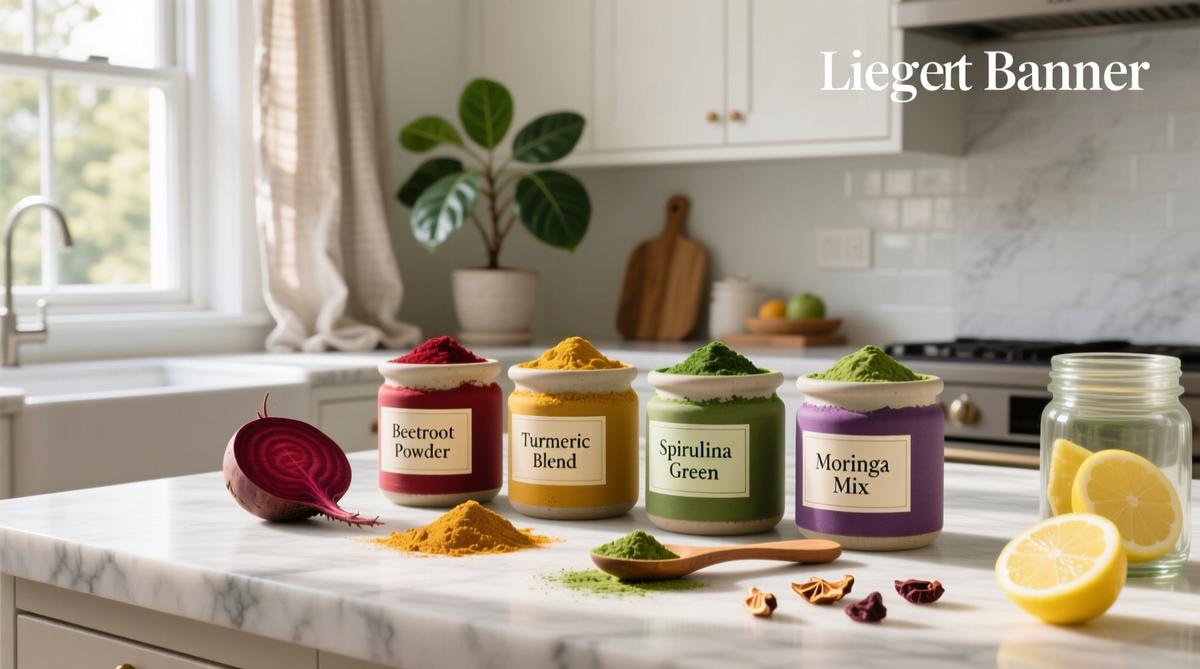
Natural food powders are becoming popular because they are easy to use and convenient to include in everyday meals. Products like moringa powder, beetroot powder and spirulina powder are commonly used in smoothies, juices and different food recipes.
But how do you know whether the powder you are buying is good quality?
Not all natural powders are the same. Their quality can depend on the raw materials, processing methods, storage conditions and packaging.
- 1. Check the Colour of the Powder
- 2. Check the Smell
- 3. Read the Ingredients List
- 4. Check the Manufacturing and Expiry Dates
- 5. Check the Packaging Quality
- 6. Check the Texture
- 7. Check Laboratory Testing Reports
- 8. How to Check the Quality of Different Natural Powders
- 9. Common Mistakes to Avoid When Buying Natural Powders
- 10. How to Store Natural Powders After Buying
- 11. Why Choose Quality Natural Powders?
- Frequently Asked Questions (FAQs)
In this guide, we will explain some simple ways to check the quality of natural powders before purchasing them.
1. Check the Colour of the Powder
Colour is one of the first things you notice when buying a natural food powder.
Different powders naturally have different colours.
- Moringa Powder: Usually has a green colour.
- Beetroot Powder: Usually has a reddish-pink or deep red colour.
- Spirulina Powder: Usually has a dark green or blue-green colour.
However, colour alone cannot confirm purity or quality. Natural colour can vary depending on the raw materials and processing conditions.
2. Check the Smell
Natural food powders generally have their own characteristic smell.
Here are some examples:
Moringa Powder: Usually has a green, leafy and slightly earthy smell.
Beetroot Powder: Usually has a mild earthy and slightly sweet smell.
Spirulina Powder: Usually has a distinctive earthy or sea-like smell.
Avoid products with unusual chemical-like, rancid or musty smells. These may indicate quality or storage problems.
3. Read the Ingredients List
Always check the ingredients before purchasing natural powders.
For example:
- Moringa Powder: Moringa leaf powder.
- Beetroot Powder: Beetroot powder.
- Spirulina Powder: Spirulina powder.
If you are looking for a single-ingredient product, check that the label does not list unnecessary fillers, added colours, flavours or other ingredients.
Also check the allergen information and any cross-contamination warnings.
4. Check the Manufacturing and Expiry Dates
Freshness and proper storage are important for maintaining food quality.
Before purchasing, check:
- Manufacturing or packing date.
- Best-before date.
- Batch number.
- Manufacturer or packer details.
- FSSAI license information, as applicable.
Avoid purchasing products with missing or unclear date information.
5. Check the Packaging Quality
Good packaging helps protect natural powders from moisture, air, light and contamination.
Look for:
- Properly sealed packaging.
- Airtight containers or suitable food-grade pouches.
- No damaged or leaking packaging.
- Clear product information.
- Proper storage instructions.
Glass jars, food-grade containers and suitable sealed pouches can all be used when properly designed for the product.
6. Check the Texture
The texture of natural powders can give you some basic information about their condition.
Generally, good-quality powders should have a reasonably consistent texture appropriate to the product.
Check for:
- Unusual hard lumps.
- Excessive moisture.
- Visible foreign particles.
- Signs of mould or contamination.
Small differences in particle size are normal. A fine texture alone does not prove that a powder is pure.
7. Check Laboratory Testing Reports
This is one of the most important ways to evaluate food powder quality.
Appearance, smell and taste cannot confirm that a product is free from harmful contaminants.
Reliable manufacturers and suppliers should be able to provide appropriate laboratory test reports.
Depending on the product, useful tests include:
Microbiological Testing
- Total plate count.
- Yeast and mould.
- Relevant harmful microorganisms.
Heavy Metal Testing
- Lead.
- Arsenic.
- Cadmium.
- Mercury.
Other Product-Specific Tests
For spirulina, testing for microcystins and other relevant cyanotoxins is particularly important.
For moringa and beetroot, appropriate pesticide residue and microbiological testing may also be relevant.
Look for reports from competent laboratories, preferably NABL-accredited laboratories with the relevant testing scope.
Whenever possible, request a report that matches the actual product batch you are purchasing.
8. How to Check the Quality of Different Natural Powders
Different natural powders require different quality considerations.
Moringa Powder
Moringa powder is made from dried moringa leaves.
Things to check:
- Natural green colour.
- Characteristic leafy smell.
- Clean and consistent powder.
- No visible foreign particles.
- Appropriate microbiological and pesticide residue testing.
Beetroot Powder
Beetroot powder is made from dried beetroot.
Things to check:
- Natural reddish or pinkish colour.
- Characteristic earthy smell.
- No signs of moisture or mould.
- Properly sealed packaging.
- Appropriate microbiological and contaminant testing.
Spirulina Powder
Spirulina is a blue-green microalga commonly used as a food ingredient.
Things to check:
- Characteristic green or blue-green colour.
- Normal product-specific smell.
- No unusual contamination or foreign particles.
- Proper supplier information.
- Laboratory testing for heavy metals, microcystins and microbiological quality.
Spirulina deserves particular attention because contaminated raw materials can introduce harmful substances into the finished product.
9. Common Mistakes to Avoid When Buying Natural Powders
Many customers make simple mistakes when selecting natural food powders.
Avoid these common mistakes:
- Choosing a product only because it is cheap.
- Believing that brighter colour always means better quality.
- Ignoring the ingredients list.
- Purchasing products without proper manufacturer details.
- Ignoring the expiry or best-before date.
- Not checking packaging conditions.
- Assuming that natural products never have side effects.
- Trusting health claims without proper evidence.
Remember, a good product should have transparent information and appropriate quality checks.
10. How to Store Natural Powders After Buying
Even good-quality natural powders can lose quality if they are stored incorrectly.
Follow these simple storage tips:
- Keep the powder in an airtight container.
- Store it in a cool and dry place.
- Avoid direct sunlight.
- Always use a clean and dry spoon.
- Close the lid properly after every use.
- Keep the product away from moisture.
Follow the storage instructions on the product label.
If you notice mould, unusual odour or signs of contamination, stop using the product.
11. Why Choose Quality Natural Powders?
Choosing good-quality natural powders helps you make more informed food choices.
At Sushma Foods, we believe that customers should understand what they purchase.
Our product range includes:
Moringa Powder: A convenient way to add moringa leaves to everyday recipes.
Beetroot Powder: A simple ingredient for adding natural colour and earthy flavour to food.
Spirulina Powder: A blue-green microalgae powder that can be added to smoothies and other recipes.
We believe in Tradition • Quality • Trust.
Conclusion
Checking the quality of natural powders is important before adding them to your daily food routine.
Always check the ingredients, colour, smell, texture, packaging, manufacturing details and laboratory testing information.
Remember that appearance and smell are only basic checks. Proper laboratory testing is necessary to evaluate important safety and quality parameters.
Choose reliable products, read the labels and store them correctly.
Explore natural food ingredients with Sushma Foods – Tradition • Quality • Trust.
Frequently Asked Questions (FAQs)
1. How can I identify pure natural powder?
Check the ingredients list, manufacturer details, packaging and relevant laboratory reports. Appearance alone cannot prove purity.
2. How do I check the quality of moringa powder?
Check its characteristic green colour, leafy smell, ingredients, packaging and appropriate laboratory test reports.
3. How can I identify good-quality beetroot powder?
Look for its natural reddish colour, characteristic smell, suitable packaging and laboratory testing information.
4. How do I check spirulina powder quality?
Check the supplier’s details and request laboratory reports covering heavy metals, microcystins and microbiological quality.
5. Does natural powder have an expiry date?
Yes. Natural food powders have a best-before or expiry date depending on the product and applicable labelling requirements. Always follow the packaging instructions.
6. Can natural powders be stored in the refrigerator?
Follow the manufacturer’s storage instructions. In most cases, a cool, dry place and an airtight container are suitable. Avoid condensation and moisture.
7. Is expensive natural powder always better?
No. Price does not guarantee quality. Check ingredients, manufacturing information, testing reports and packaging before purchasing.
Leave a Reply