- 1. What Is Spirulina?
- 2. What Is Chlorella?
- 3. Spirulina vs Chlorella: Key Differences
- 4. Nutritional Differences Between Spirulina and Chlorella
- 5. Benefits of Spirulina
- 6. Benefits of Chlorella
- 7. Which Is Better: Spirulina or Chlorella?
- 8. Can You Take Spirulina and Chlorella Together?
- 9. Who Should Be Careful Before Using Them?
- 10. How to Choose Good-Quality Spirulina and Chlorella
- 11. How to Use Spirulina and Chlorella Powder
- Frequently Asked Questions (FAQs)
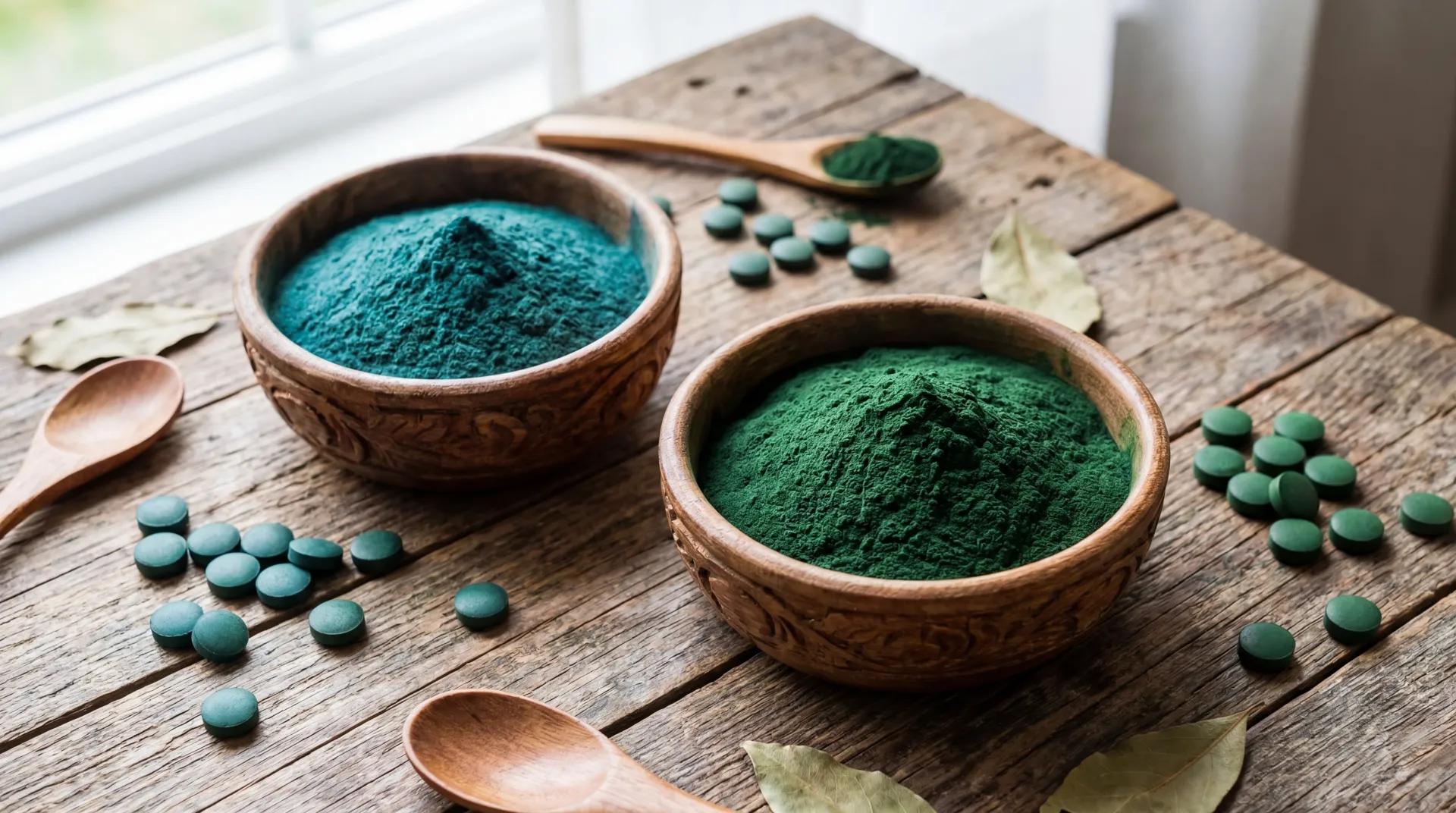
Spirulina and chlorella are two popular green superfoods that are becoming increasingly common in healthy diets. Both are available in powder and tablet forms and are often used in smoothies, juices and other food preparations.
But are spirulina and chlorella the same? Which one has more protein? What makes them different?
Although both come from water-based microorganisms, they have different nutritional compositions, colours, structures and uses.
In this article, let’s understand the key differences between spirulina and chlorella in simple words.
1. What Is Spirulina?
Spirulina is a blue-green microorganism commonly called blue-green algae. Scientifically, it belongs to a group of bacteria called cyanobacteria.
It is known for its protein content and naturally occurring nutrients.
Spirulina is commonly available as:
- Spirulina powder
- Spirulina tablets
- Spirulina capsules
Nutritional Features of Spirulina
Spirulina contains:
- Plant-based protein.
- Iron.
- Certain B vitamins.
- Beta-carotene.
- Phycocyanin, a natural blue pigment.
- Other naturally occurring nutrients.
One of its special components is phycocyanin, which gives spirulina its characteristic blue-green colour.
2. What Is Chlorella?
Chlorella is a type of single-celled green freshwater microalga.
It is popular as a food supplement because it contains protein, chlorophyll, minerals and other nutrients.
Chlorella is commonly available as:
- Chlorella powder
- Chlorella tablets
- Chlorella capsules
Nutritional Features of Chlorella
Chlorella contains:
- Plant-based protein.
- Chlorophyll.
- Iron.
- Folate.
- Carotenoids.
- Other naturally occurring vitamins and minerals.
Chlorella has a strong green colour because it contains chlorophyll.
3. Spirulina vs Chlorella: Key Differences
Here is a simple comparison to help you understand the differences.
| Feature | Spirulina | Chlorella |
|---|---|---|
| Scientific classification | Cyanobacteria | Green microalgae |
| Common colour | Blue-green | Dark green |
| Main pigment | Phycocyanin | Chlorophyll |
| Protein | Generally high | Generally high |
| Cell structure | No cellulose cell wall | Has a rigid cell wall |
| Common habitat | Alkaline water | Freshwater |
| Common forms | Powder, tablets, capsules | Powder, tablets, capsules |
| Taste | Earthy, slightly sea-like | Earthy, grassy |
Nutrient levels vary depending on the species, growing conditions, processing and product quality.
4. Nutritional Differences Between Spirulina and Chlorella
Both are nutrient-rich ingredients, but their nutritional profiles are not identical.
Protein Content
Spirulina is generally known for its high protein concentration. Chlorella also contains a considerable amount of protein.
Both can contribute plant-based protein to a varied diet.
However, the actual protein content depends on the product and its serving size.
Chlorophyll
Chlorella is particularly known for its chlorophyll content.
Chlorophyll is a natural green pigment found in photosynthetic organisms.
Spirulina also contains pigments, but its most distinctive pigment is phycocyanin.
Iron
Both spirulina and chlorella contain iron.
However, the quantity can vary significantly between products. Always check the nutritional information on the packaging.
Antioxidant Compounds
Spirulina contains phycocyanin and carotenoids, while chlorella contains chlorophyll and carotenoids.
These naturally occurring compounds are studied for their antioxidant properties.
5. Benefits of Spirulina
Spirulina is popular because of its nutritional composition.
Some of its nutritional features include:
1. Provides Plant-Based Protein
Spirulina is a concentrated source of protein and contains several essential amino acids.
2. Contains Phycocyanin
Phycocyanin is a natural blue pigment studied for its antioxidant properties.
3. Contains Iron
Spirulina provides iron, which is an essential mineral involved in normal red blood cell production.
4. Contains Beta-Carotene
Beta-carotene is a plant pigment that the body can convert into vitamin A.
5. Easy to Include in Recipes
Spirulina powder can be added to smoothies, juices and selected food preparations.
6. Benefits of Chlorella
Chlorella is another interesting food ingredient with a different nutritional profile.
1. Contains Chlorophyll
Chlorella is known for its chlorophyll content, which gives it a deep green colour.
2. Provides Plant-Based Protein
It contains protein and essential amino acids.
3. Contains Iron and Other Minerals
Chlorella can provide minerals such as iron, depending on the product.
4. Contains Carotenoids
It contains naturally occurring carotenoids, which are plant pigments.
5. Can Be Added to Different Recipes
Chlorella powder can be mixed into smoothies, juices and other food preparations.
7. Which Is Better: Spirulina or Chlorella?
There is no single answer because both have different nutritional characteristics.
Choose based on your food preferences and nutritional requirements.
- For a protein-rich algae ingredient: Spirulina is generally known for its high protein concentration.
- For chlorophyll: Chlorella is particularly known for its chlorophyll content.
- For phycocyanin: Spirulina is the better-known source.
- For everyday recipes: Both can be used in smoothies and other preparations.
Neither should be considered a replacement for a balanced diet or medical treatment.
8. Can You Take Spirulina and Chlorella Together?
Some people use spirulina and chlorella together because they have different nutritional profiles.
However, taking both together does not automatically provide additional health benefits.
Before combining them:
- Check the recommended serving instructions.
- Check the ingredients and nutritional information.
- Choose products from reliable manufacturers.
- Consider your existing dietary supplements and medications.
- Consult a healthcare professional if you have a medical condition.
9. Who Should Be Careful Before Using Them?
Although spirulina and chlorella are used as food ingredients, they may not be suitable for everyone.
Some people should seek professional advice before regular use.
Pregnant and Breastfeeding Women
There is insufficient safety information for many concentrated algae supplements during pregnancy and breastfeeding. Seek medical advice before using them.
People Taking Blood-Thinning Medication
Chlorella can contain vitamin K, which may affect the action of warfarin. People taking warfarin should consult their healthcare professional before using it.
People With Autoimmune Conditions
People with autoimmune conditions should seek medical advice before using concentrated algae supplements.
People With Allergies
Check the ingredient list and possible allergen or cross-contamination information.
People With Medical Conditions
People with kidney or liver conditions, or those taking regular medication, should consult a healthcare professional before using these supplements.
10. How to Choose Good-Quality Spirulina and Chlorella
Product quality is very important when purchasing algae-based powders.
Before buying, check:
- Ingredients: Look for clear ingredient information.
- Manufacturer details: Check the manufacturer’s identity and contact information.
- Packaging: Choose properly sealed food-grade packaging.
- Expiry date: Check the best-before date.
- Laboratory reports: Look for appropriate testing for heavy metals and microbiological contamination.
- Spirulina-specific testing: Check whether the supplier tests for microcystins and other relevant cyanotoxins.
- Storage instructions: Follow the manufacturer’s instructions.
Do not judge product quality only by colour or price.
11. How to Use Spirulina and Chlorella Powder
Both powders can be used in different food preparations.
Spirulina Powder
- Add to fruit smoothies.
- Mix into vegetable juices.
- Blend with banana and other fruits.
- Add to selected homemade recipes.
Chlorella Powder
- Mix into smoothies.
- Add to vegetable juices.
- Blend with fruits.
- Add to selected soups and recipes.
Always follow the serving instructions on the product label.
12. Final Thoughts
Spirulina and chlorella are two different water-based food ingredients with interesting nutritional profiles.
Spirulina is particularly known for its protein and phycocyanin content, while chlorella is known for its chlorophyll content.
Both can be included in suitable food routines, but product quality, individual health conditions and serving quantities matter.
Choose reliable products, read the labels and make informed food choices.
Discover the goodness of natural food ingredients with Sushma Foods – Tradition • Quality • Trust.
Frequently Asked Questions (FAQs)
1. Are spirulina and chlorella the same?
No. Spirulina is a cyanobacterium, while chlorella is a single-celled green microalga. They have different nutritional profiles and structures.
2. Which has more protein, spirulina or chlorella?
Spirulina generally has a higher protein percentage, although the exact amount depends on the product and processing method.
3. Which has more chlorophyll?
Chlorella is generally known for its higher chlorophyll content.
4. Can I mix spirulina and chlorella?
Yes, they can be combined in food preparations, provided the products are suitable for you and their serving instructions are followed.
5. Is spirulina a good source of vitamin B12?
Spirulina mainly contains pseudovitamin B12, which is not a reliable source of biologically active vitamin B12 for humans.
6. Is chlorella suitable for vegetarians?
Chlorella is a microalga and is generally suitable for vegetarian diets, subject to the ingredients and processing of the particular product.
7. Can I consume spirulina or chlorella every day?
Some people use them regularly, but suitability depends on individual health, product quality and serving size. Follow the product label and seek professional advice when necessary.
8. How should spirulina and chlorella powders be stored?
Keep them in airtight packaging in a cool, dry place, away from moisture and direct sunlight.
Disclaimer: This article is for educational purposes only. Spirulina and chlorella are food ingredients, not medicines. They are not intended to diagnose, treat, cure or prevent any disease.
Leave a Reply